
Disclosure: This article may contain affiliate links. This means we may earn a commission at no extra cost to you. As an Amazon Associate, we earn from qualifying purchases. We may also recommend products and services through other affiliate programs.
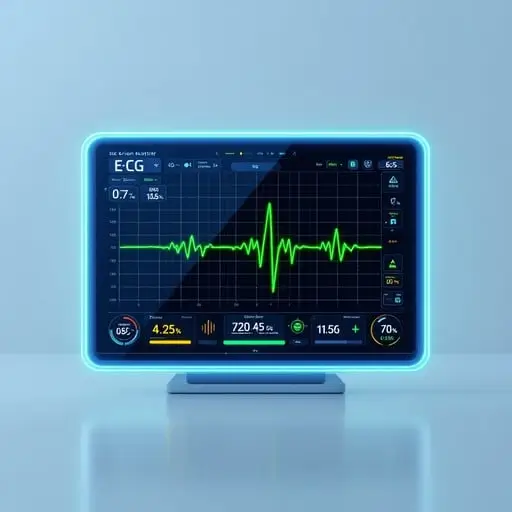
In 2025, ECG wearable devices have become essential tools for people who want to track their heart health in real time. These devices are now more accurate, more portable, and more advanced, giving users medical-grade insights without visiting a clinic. Whether you’re managing a heart condition or simply taking a proactive approach to your wellness, today’s wearable ECG technology offers powerful capabilities previously found only in hospitals.
ECG wearables are especially valuable for people who track heart rhythm, heart rate variability, atrial fibrillation signals (AFib), stress levels, and early abnormalities. With AI-powered analytics and improved sensors, these devices can help millions monitor their cardiovascular health smarter than ever before.
As wearable ECG devices become smarter, they increasingly complement non-invasive diabetes monitoring wearables to support early detection of chronic health conditions.
Best Wearable Technology for Seniors in 2025
Table of Contents
What Are ECG Wearable Devices?
ECG wearable devices are smart devices—often portable monitors, chest straps, or wrist-based wearables—that record the electrical signals produced by your heart. Unlike simple heart-rate trackers, ECG sensors provide in-depth cardiac insights by analyzing the actual rhythm and signal pattern of heartbeats.
These devices are commonly used to detect:
- Irregular heart rhythms
- AFib warnings
- Tachycardia / bradycardia patterns
- Stress-related changes
- Heart rate variability (HRV)
Many modern wearables now combine ECG with PPG light sensors, AI algorithms, Bluetooth connectivity, and medical-grade signal processing
Read more on cardiovascular monitoring in our guide to wearable blood pressure monitors.
How ECG Wearable Devices Work
An ECG wearable uses electrodes that detect minute electrical changes when your heart beats. These signals are then translated by software into readable ECG waveforms.
Key technologies involved:
- Multi-lead ECG recording
- Bluetooth data transmission
- AI interpretation of ECG patterns
- Cloud-based trend tracking
- Mobile and desktop visualization tools
The accuracy of an ECG wearable depends on:
- Number of ECG leads (more leads = better accuracy)
- Electrode quality
- Sampling rate
- Noise reduction algorithms
- Software interpretation
Devices with multiple leads—like 6-lead and 12-lead portables—offer much deeper cardiac analysis compared to single-lead wearables found in smartwatches.
Best Wearable Technology for Seniors in 2025
Why People Are Choosing ECG Wearables in 2026
Heart disease remains the world’s leading cause of death. Many users today want smart monitors that allow:
- Early detection of heart abnormalities
- Convenient at-home cardiac checks
- Tracking recovery progress after surgery
- Continuous wellness monitoring
- Better control of chronic conditions
Unlike traditional hospital machines, ECG wearables are:
- Portable
- Affordable
- Subscription-free (depending on device)
- Easy to use
- Connected to your smartphone
These advantages make them ideal for seniors, athletes, people with hypertension, and anyone wanting proactive health management.
Featured Product: EMAY 6L Portable ECG Monitor (Amazon)
A Medical-Grade 6-Lead ECG Device for Home Heart Monitoring
If you want highly accurate results beyond what wrist trackers provide, the EMAY 6L Portable ECG Monitor is one of the strongest options in 2025. It offers 6-lead ECG recording, giving you hospital-level insights in under a minute.
👉 Amazon Link: Product
Key Features
- Records ECG and heart rate using advanced 6-channel technology
- Works with smartphone (Bluetooth) and PC (USB connection)
- No subscription or hidden fees
- Built-in rechargeable lithium battery
- Allows unlimited case storage and history review
- Includes measurement tools, sample mode, and time settings
- Designed for over-the-counter use at home
- Not intended for users with implanted pacemakers
- Not a replacement for hospital-grade ECG devices—but excellent for home monitoring
Why it Stands Out
Unlike traditional smartwatches that usually offer only single-lead ECG, the EMAY 6L provides multi-lead data, which significantly improves the detection of:
Early arrhythmias
Waveform abnormalities
Atrial activity
ST-segment changes
This makes it ideal for users who need serious cardiac insight, not just basic heart-rate monitoring.
This product fits perfectly within the category of ECG wearable devices because it is compact, handheld, and fully portable—allowing you to check your heart anytime, anywhere.
ECG Wearables vs. Traditional Heart Monitors
Traditional heart monitors (like Holter devices) are accurate—but bulky, expensive, and require a medical facility.
ECG wearables, on the other hand:
| ECG Wearable Devices | Traditional Holter Monitor | Feature |
|---|---|---|
| Very high | Low | Portability |
| Affordable | High | Cost |
| Yes | No | Real-time visualization |
| Advanced | Limited | Trend tracking |
| Instant via app | Must return device | Data sharing |
| Simple and fast | Requires setup | Ease of use |
Wearable ECGs are not replacements for diagnostic tools, but they excel for daily monitoring, early alerts, and lifestyle health tracking.
Want to build a healthy lifestyle routine? Check our guide on wellness routines backed by science.
Wearable Technology for Monitoring Electrocardiograms (ECGs) in Adults: A Scoping Review
Wearable ECG Device and Machine Learning for Heart Monitoring
Who Should Use ECG Wearable Devices?
These devices are particularly valuable for:
- People with previous heart conditions
- Those experiencing palpitations or irregular beats
- Athletes tracking performance and HRV
- Seniors needing continuous heart rhythm monitoring
- Anyone managing stress and cardiovascular risk
With AI-driven analytics, the accuracy continues to improve each year—making 2026 one of the best times to adopt wearable heart technology.
Future Trends in ECG Wearables
ECG wearables in 2026 are moving toward:
1. Multi-sensor fusion
Combining ECG + PPG + AI to predict arrhythmias before they occur.
2. Continuous multi-lead monitoring
Soon, compact devices will provide more than 6 leads — without wires.
3. Medical-grade AI diagnostics
FDA-approved algorithms capable of detecting abnormalities automatically.
4. Integration with health ecosystems
Wearables linking to smart blood pressure monitors, glucose monitors, and other wellness devices.
5. Predictive analytics
Using long-term data to forecast cardiovascular risks.
This evolution is turning heart monitoring into a daily lifestyle habit, rather than a hospital-only procedure.
Conclusion
ECG wearable devices are transforming the way people monitor their cardiovascular health. With advanced sensors, AI-powered analysis, and portable multi-lead designs, they offer powerful insights directly from home. Devices like the EMAY 6L Portable ECG Monitor bring hospital-level capabilities to everyday users—without subscriptions or complex setups.
If you’re looking for smarter, real-time heart monitoring in 2025, adopting an ECG wearable is one of the best investments in your long-term wellness.
Pingback: AI Wearable Health Devices: How Smart Wearables Are Transforming Personal Health in 2026
Pingback: AI in Fitness & Health Wearables: How It Actually Works in 2026 Smarter Tracking, Better Results
Pingback: Amazfit Helio Strap Review (2026): Accuracy, Health Features & Is It Worth It?
Pingback: Best Wearable Technology for Seniors 2025
Pingback: Best Non-Invasive Wearable Diabetes Monitors (2026): Glucose Tracking Without Needles
Pingback: Best Wearable Fitness Trackers (2026) Reviewed & Compared
Pingback: Medical Grade Wearables: How Accurate Are FDA-Cleared Health Devices in 2026?
Pingback: Can Wearable Data Be Used for Medical Diagnosis? Legal & Clinical Reality Explained
Pingback: How Accurate Is Wearable Health Data for Medical Use? Evidence-Based Review
Pingback: Non-Invasive Health Monitoring Wearables (2026): How Smart Devices Track Health Without Needles
Pingback: Continuous Health Monitoring Wearables (2026): Real-Time Health Tracking Explained