
Disclosure: This article may contain affiliate links. This means we may earn a commission at no extra cost to you. As an Amazon Associate, we earn from qualifying purchases. We may also recommend products and services through other affiliate programs.
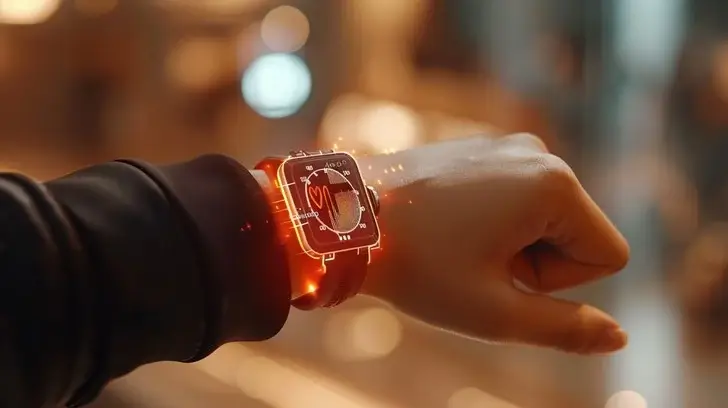
Table of Contents
Introduction
Modern wearable devices have changed how we understand stress. Instead of guessing based on feelings, users can now rely on physiological data to see how their body responds to daily pressure, recovery, sleep, and lifestyle. Understanding how wearables measure stress reveals the science behind nervous system tracking and why this technology is becoming essential for preventive health.
Wearables do not directly measure “stress” — they analyze biological signals linked to the autonomic nervous system, combining heart rate variability, skin response, sleep recovery, and AI-driven insights.
Modern health technology has made wearable stress monitoring possible by analyzing real-time physiological signals such as HRV, heart rate, and nervous system response.
The Science Behind Stress Tracking
Stress is controlled by the autonomic nervous system, which has two main branches:
- Sympathetic system (fight or flight — stress response)
- Parasympathetic system (rest and recovery)
Wearables monitor signals that reflect how these systems interact, helping detect stress load and recovery balance.
Heart Rate Variability (HRV): The Core Stress Indicator
HRV measures the variation between heartbeats and is the most important physiological signal for stress monitoring.
- Low HRV → Higher stress, fatigue, nervous system strain
- High HRV → Better recovery, resilience, nervous system balance
Wearables track HRV continuously to detect stress patterns across the day and night.
Most advanced HRV wearables continuously track heart rate variability to understand how the autonomic nervous system responds to stress and recovery.
Skin Response (Electrodermal Activity – EDA)
Some wearables measure tiny changes in sweat gland activity, known as electrodermal activity. Stress activates the sympathetic nervous system, increasing skin conductance.
EDA helps detect:
- Emotional stress
- Cognitive load
- Sudden stress spikes
- Nervous system activation
When combined with HRV, it improves stress detection accuracy.
Resting Heart Rate & Stress Load
Stress often elevates resting heart rate. Wearables analyze trends rather than single readings, detecting:
- Chronic stress buildup
- Illness or fatigue signals
- Recovery quality
- Overtraining or nervous system overload
Long-term tracking gives meaningful insights.
Sleep & Recovery Analysis
Sleep is one of the strongest indicators of stress resilience. Wearables monitor:
- Sleep stages
- HRV during sleep
- Heart rate recovery
- Nighttime stress signals
Poor sleep often correlates with higher daytime stress and reduced recovery.
Breathing Patterns & Nervous System State
Some advanced wearables monitor breathing rate and rhythm, which change during stress. Fast, shallow breathing often indicates sympathetic activation, while slow breathing reflects recovery and parasympathetic dominance.
AI Stress Algorithms: How Devices Turn Data into Stress Scores
Wearables combine multiple signals using machine learning models to calculate:
- Stress score
- Recovery score
- Readiness level
- Nervous system balance
AI analyzes trends, patterns, and deviations from baseline — making stress tracking personalized rather than generic.
Accuracy of Wearable Stress Measurement
Wearables are reliable for:
- Long-term stress pattern tracking
- Recovery and nervous system analysis
- Lifestyle and behavior correlation
They are not medical diagnostic tools, but accuracy improves when devices combine HRV, heart rate, sleep, and skin response continuously.
Why Continuous Stress Monitoring Matters
Continuous monitoring helps:
- Detect chronic stress early
- Prevent burnout and fatigue
- Improve sleep and recovery
- Optimize training and performance
- Support mental and nervous system health
- Improve preventive healthcare awareness
These systems are part of a broader evolution toward continuous health monitoring wearables, enabling real-time tracking of stress, recovery, and long-term physiological balance.
Limitations of Stress Tracking Wearables
- Stress is influenced by psychological and environmental factors
- Algorithms vary across devices
- Short-term readings can be misleading
- Requires consistent long-term use
Still, wearable stress technology continues to evolve rapidly.
Authoritative sources such as Harvard Health Publishing highlight the clinical relevance of heart rate variability, while Cleveland Clinic provides medical insight into the relationship between stress and autonomic nervous system function.
FAQs – How Wearables Measure Stress
1. Do wearables directly measure stress?
No. Wearables do not directly detect stress. Instead, they analyze physiological signals such as HRV, heart rate, skin response, and sleep patterns to estimate nervous system stress levels.
2. What is the most important signal for stress tracking?
Heart rate variability (HRV) is the most important indicator. Lower HRV usually reflects higher stress and reduced recovery, while higher HRV indicates better nervous system balance.
3. Are wearable stress measurements accurate?
Wearables are reliable for tracking long-term stress trends and recovery patterns, but they are not medical diagnostic tools. Accuracy improves with continuous monitoring and multiple sensors.
4. Can wearables detect emotional stress?
Yes. Some devices use electrodermal activity (EDA) and heart rate variability to detect emotional and cognitive stress responses.
5. Why is continuous stress monitoring useful?
It helps identify chronic stress early, improve recovery, optimize sleep, and support long-term nervous system and mental health.
Explore how wearable technology is transforming stress analysis, nervous system tracking, and preventive health — only on WearableWell.com.