
Disclosure: This article contains affiliate links. If you purchase through one of these links, WearableWell may earn a small commission at no additional cost to you. Our recommendations are based on independent research, product features, real-world usability, and overall value—not on affiliate partnerships.
Table of Contents
Quick Verdict
Short on time?
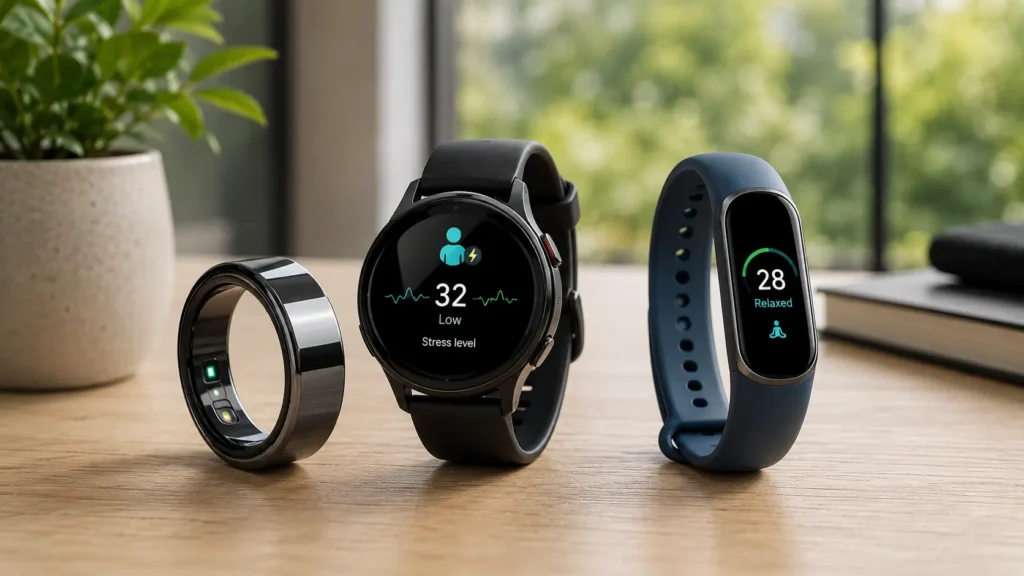
If you’re looking for the best wearable for stress monitoring in 2026, Oura Ring 4 is our top recommendation thanks to its industry-leading HRV analysis, excellent sleep tracking, long battery life, and actionable recovery insights.
If you prefer a smartwatch, Garmin Venu 3 offers the best balance of wellness, fitness, and battery life without requiring a subscription.
For serious athletes focused on recovery, WHOOP 5.0 remains the gold standard.
Ready to Check the Latest Price?
If the Oura Ring 4 sounds like the right choice for your lifestyle, check today’s price and customer reviews before making your decision.
Why You Can Trust WearableWell
At WearableWell, we don’t rank products based on marketing claims or affiliate commissions.
Every recommendation is made using the same evaluation framework that focuses on what actually matters to buyers:
- Accuracy of health metrics
- Stress monitoring capabilities
- Heart Rate Variability (HRV) analysis
- Sleep tracking quality
- Recovery insights
- Battery life
- Long-term comfort
- Mobile app experience
- Software updates
- Overall value for money
Rather than recommending every popular device, we only include wearables that offer meaningful stress-related health insights backed by reliable sensors and mature health platforms.
Our goal is simple: help readers invest in devices that provide real health value—not just impressive specifications.
How We Selected the Best Wearables
Choosing the right wearable for stress monitoring isn’t as simple as buying the newest smartwatch.
Many devices advertise “stress tracking,” but only a handful provide consistent and useful health insights.
For this guide, we evaluated wearables using the following criteria:
Health Sensor Accuracy
Reliable HRV, heart rate, skin temperature, respiratory rate, and sleep tracking are essential for estimating stress levels.
Recovery Analysis
The best devices don’t simply collect data.
They explain what the numbers mean and help users understand how stress affects recovery, energy levels, and overall wellness.
Sleep Tracking
Since poor sleep is one of the strongest indicators of chronic stress, sleep accuracy was a major factor in our evaluation.
Daily Comfort
A wearable that feels uncomfortable won’t be worn consistently.
We prioritized devices designed for continuous 24/7 health monitoring.
Battery Performance
Long battery life allows devices to collect uninterrupted health data throughout the day and night.
Software Experience
The companion app should transform raw health data into practical recommendations instead of overwhelming users with complex charts.
Comparison Table
| Product | Best For | Stress Accuracy | Sleep Tracking | Battery | Subscription |
|---|---|---|---|---|---|
| Oura Ring 4 | Best Overall | ⭐⭐⭐⭐⭐ | ⭐⭐⭐⭐⭐ | Up to 8 Days | Yes |
| Garmin Venu 3 | Best Smartwatch | ⭐⭐⭐⭐⭐ | ⭐⭐⭐⭐⭐ | Up to 14 Days | No |
| WHOOP 5.0 | Athletes | ⭐⭐⭐⭐⭐ | ⭐⭐⭐⭐⭐ | Continuous | Yes |
| Samsung Galaxy Watch Ultra | Android Users | ⭐⭐⭐⭐☆ | ⭐⭐⭐⭐☆ | Up to 3 Days | No |
| Google Pixel Watch 3 | Pixel Users | ⭐⭐⭐⭐☆ | ⭐⭐⭐⭐☆ | Up to 36 Hours | No |
| RingConn Gen 2 | Best Smart Ring Without Subscription | ⭐⭐⭐⭐☆ | ⭐⭐⭐⭐⭐ | Up to 12 Days | No |
| Fitbit Charge 6 | Best Budget | ⭐⭐⭐⭐☆ | ⭐⭐⭐⭐☆ | Up to 7 Days | Optional |
| Amazfit Balance | Best Value | ⭐⭐⭐⭐☆ | ⭐⭐⭐⭐☆ | Up to 14 Days | No |
Introduction
Stress is no longer just a mental health concern—it’s a whole-body issue that affects sleep, heart health, recovery, productivity, and overall quality of life. Whether you’re managing demanding workdays, training for athletic performance, or simply trying to improve your well-being, understanding how your body responds to stress has become more important than ever.
Fortunately, today’s wearable technology goes far beyond counting steps or tracking calories. Modern smart rings, smartwatches, and fitness trackers can continuously monitor physiological signals such as Heart Rate Variability (HRV), resting heart rate, respiratory rate, skin temperature, sleep quality, and recovery trends. Together, these metrics provide valuable insights into how your body reacts to physical and emotional stress throughout the day.
While no wearable can diagnose anxiety or replace professional medical advice, the best devices can help you recognize unhealthy patterns before they begin affecting your sleep, performance, or long-term health. They also encourage healthier habits through personalized recovery recommendations, guided breathing exercises, and detailed wellness reports.
In this guide, we’ve carefully selected the best wearables for stress monitoring in 2026 based on sensor quality, health features, battery life, comfort, software experience, and overall value. Whether you’re looking for a discreet smart ring, a feature-rich smartwatch, or a fitness-focused wearable, you’ll find the right option for your lifestyle and budget.
Our Top Picks
Best Overall: Oura Ring 4
Best Smartwatch: Garmin Venu 3
Best for Athletes: WHOOP 5.0
Best Budget Choice: Fitbit Charge 6
Best Smart Ring Without Subscription: RingConn Gen 2
Ready to Check the Latest Price?
If the Garmin sounds like the right choice for your lifestyle, check today’s price and customer reviews before making your decision.
What You’ll Learn in This Guide
By the end of this article, you’ll understand:
- How wearable devices estimate stress levels
- Which health metrics matter most for stress monitoring
- The strengths and weaknesses of each recommended device
- Whether a smart ring or smartwatch is the better choice
- How to choose the right wearable based on your lifestyle and budget
- Which wearable offers the best overall value in 2026
The Best Wearables for Stress Monitoring in 2026
Not all wearables measure stress the same way. Some rely primarily on Heart Rate Variability (HRV), while others combine multiple biometric signals—including sleep quality, resting heart rate, respiratory rate, skin temperature, and activity levels—to estimate how your body is coping with daily stress.
Below are the devices that consistently delivered the best combination of accuracy, comfort, battery life, and actionable health insights.
1. Oura Ring 4
Best Overall Wearable for Stress Monitoring
Overall Rating: ⭐⭐⭐⭐⭐ (9.8/10)
Best For
- Professionals
- Frequent travelers
- People focused on sleep quality
- Anyone wanting the most complete recovery insights
Why We Recommend It
If your primary goal is understanding how stress affects your body, Oura Ring 4 remains one of the most advanced consumer wearables available.
Unlike traditional smartwatches that focus heavily on notifications and fitness metrics, Oura is designed almost entirely around health and recovery. It quietly collects biometric data throughout the day and night, then converts that information into easy-to-understand insights.
Its biggest strength isn’t simply measuring stress—it’s helping you understand why your stress levels change.
For example, after a poor night’s sleep, intense workout, long flight, or stressful workday, Oura can often detect reduced HRV, elevated resting heart rate, and changes in body temperature before you even notice symptoms yourself.
That combination makes it one of the best tools available for long-term wellness tracking.
Key Features
- Continuous HRV Monitoring
- Daytime Stress Tracking
- Readiness Score
- Sleep Score
- Body Temperature Trends
- Blood Oxygen Monitoring
- Women’s Health Insights
- Automatic Activity Detection
- Personalized Recovery Recommendations
What We Like
Industry-leading sleep tracking
Excellent HRV accuracy
Comfortable enough for 24/7 wear
Premium titanium design
Beautiful mobile application
Actionable daily recommendations
What Could Be Better
Premium subscription unlocks the best insights
No display for notifications
Limited workout features compared with sports watches
Our Verdict
If we could recommend only one wearable for stress monitoring, Oura Ring 4 would be our first choice.
Its combination of comfort, battery life, sensor accuracy, and recovery insights makes it the benchmark against which other wellness wearables are measured.
2. Garmin Venu 3
Best Smartwatch for Stress Monitoring
Overall Rating: ⭐⭐⭐⭐⭐ (9.6/10)
Best For
- Fitness enthusiasts
- Active professionals
- Android and iPhone users
- People wanting one device for both health and exercise
Why We Recommend It
Garmin has spent years refining its health platform, and the Venu 3 represents one of its most complete wellness-focused smartwatches.
Instead of presenting isolated health metrics, Garmin combines HRV, sleep quality, activity levels, recovery time, respiration, and stress measurements into features like Body Battery and HRV Status, helping users understand how prepared their body is for the day ahead.
Unlike many competitors, Garmin doesn’t require a monthly subscription to access these advanced health insights.
Key Features
- All-Day Stress Tracking
- HRV Status
- Body Battery
- Sleep Coach
- Meditation Sessions
- Guided Breathing
- Nap Detection
- Recovery Time
- Pulse Ox Monitoring
What We Like
Outstanding battery life
No subscription fees
Extremely accurate GPS
Excellent wellness dashboard
Bright AMOLED display
Strong health ecosystem
What Could Be Better
More expensive than entry-level smartwatches
Interface takes time to learn
Our Verdict
For users who want one device that excels in both fitness and stress monitoring, the Garmin Venu 3 is difficult to beat.
It strikes an excellent balance between smartwatch functionality and professional-grade health tracking.
3. WHOOP 5.0
Best Wearable for Recovery and Athletes
Overall Rating: ⭐⭐⭐⭐⭐ (9.5/10)
Best For
- Competitive athletes
- Endurance runners
- Cyclists
- CrossFit athletes
- Recovery optimization
Why We Recommend It
WHOOP approaches health differently from almost every other wearable.
Rather than encouraging users to close activity rings or hit daily step goals, WHOOP focuses almost entirely on one question:
How recovered is your body today?
Using continuous HRV monitoring, resting heart rate, respiratory rate, sleep analysis, and daily strain scores, WHOOP creates one of the most sophisticated recovery platforms currently available.
If your stress comes from intense physical training, very few devices provide deeper insights.
Ready to Check the Latest Price?
If the WHOOP sounds like the right choice for your lifestyle, check today’s price and customer reviews before making your decision.
Key Features
- Continuous Recovery Monitoring
- HRV Analysis
- Sleep Coach
- Strain Score
- Recovery Score
- Respiratory Rate
- Skin Temperature
- Health Monitor
What We Like
Best recovery platform available
Outstanding HRV tracking
Personalized coaching
Comfortable for 24-hour wear
Excellent athlete insights
What Could Be Better
Membership required
No traditional display
Less useful for users wanting smartwatch features
Our Verdict
WHOOP is built for people who take recovery seriously.
If you’re training multiple times each week or preparing for endurance events, it’s one of the most powerful health wearables you can buy.
4. Samsung Galaxy Watch Ultra
Best Premium Android Smartwatch
Overall Rating: ⭐⭐⭐⭐☆ (9.3/10)
Best For
- Samsung users
- Android professionals
- Outdoor enthusiasts
- Everyday wellness tracking
Why We Recommend It
Samsung’s flagship smartwatch combines premium hardware with one of the strongest health ecosystems available on Android.
The Galaxy Watch Ultra measures heart rate, sleep, body composition, ECG, and stress levels throughout the day, then summarizes this information inside Samsung Health using easy-to-read wellness dashboards.
While it doesn’t provide the same depth of recovery analysis as Oura or WHOOP, it delivers an excellent balance between smartwatch functionality and health monitoring.
Key Features
- Stress Monitoring
- ECG
- Body Composition Analysis
- Sleep Coaching
- Energy Score
- Heart Rate Tracking
- Blood Oxygen Monitoring
- GPS Navigation
What We Like
Bright, premium display
Excellent Samsung Health integration
Advanced health sensors
Durable premium design
Great smartwatch features
What Could Be Better
Battery life is shorter than smart rings
Best experience requires a Samsung phone
Our Verdict
If you’re already invested in the Samsung ecosystem, the Galaxy Watch Ultra is one of the best choices for combining everyday productivity with comprehensive health monitoring.
5. Google Pixel Watch 3
Best for Google Ecosystem Users
Overall Rating: ⭐⭐⭐⭐☆ (9.1/10)
Best For
- Google Pixel owners
- Android users who value smart features
- Everyday wellness tracking
- Casual fitness enthusiasts
Why We Recommend It
The Google Pixel Watch 3 combines Google’s polished Wear OS experience with Fitbit’s mature health-tracking platform, creating one of the smartest health-focused wearables available for Android users.
Rather than simply displaying your heart rate, it interprets trends across your sleep, recovery, daily activity, and heart rate variability to provide a clearer picture of your overall wellness. For users already invested in Google’s ecosystem, this seamless integration is a major advantage.
Although its battery life doesn’t match dedicated health wearables like the Oura Ring or Garmin Venu 3, it excels in usability, app support, and everyday convenience.
Key Features
- Continuous Heart Rate Monitoring
- Sleep Tracking
- HRV Analysis
- Fitbit Readiness Insights
- Stress Management Features
- ECG App
- Blood Oxygen Monitoring
- Wear OS Integration
What We Like
Excellent display quality
Smooth Wear OS experience
Fitbit health ecosystem
Comfortable for all-day wear
Strong app support
What Could Be Better
Battery lasts about one day
Some Fitbit features require Premium
Better suited for Android than iPhone
Our Verdict
The Pixel Watch 3 is ideal for Android users who want a premium smartwatch that balances productivity with reliable health tracking.
6. RingConn Gen 2
Best Smart Ring Without a Subscription
Overall Rating: ⭐⭐⭐⭐☆ (9.2/10)
Best For
- Subscription-free health tracking
- Long battery life
- Sleep monitoring
- Budget-conscious buyers
Why We Recommend It
RingConn Gen 2 has quickly become one of the strongest competitors to the Oura Ring by offering advanced health monitoring without locking key features behind a monthly subscription.
It continuously tracks HRV, resting heart rate, sleep stages, blood oxygen, and recovery trends while remaining lightweight enough for comfortable 24-hour wear.
For users who dislike recurring subscription costs, RingConn offers outstanding long-term value.
Ready to Check the Latest Price?
If the RingConn sounds like the right choice for your lifestyle, check today’s price and customer reviews before making your decision.
Key Features
- HRV Monitoring
- Recovery Analysis
- Sleep Tracking
- Blood Oxygen Monitoring
- Stress Trends
- Activity Tracking
- Up to 12-Day Battery Life
What We Like
No monthly subscription
Excellent battery life
Comfortable design
Accurate sleep insights
Great overall value
What Could Be Better
Smaller ecosystem than Oura
Mobile app still evolving
Our Verdict
RingConn Gen 2 delivers premium wellness features at a lower long-term cost, making it one of the best alternatives to Oura Ring.
7. Fitbit Charge 6
Best Budget Stress Tracker
Overall Rating: ⭐⭐⭐⭐☆ (9.0/10)
Best For
- First-time wearable buyers
- Budget-conscious users
- Everyday health monitoring
Why We Recommend It
The Fitbit Charge 6 proves that effective stress monitoring doesn’t have to be expensive.
It combines Fitbit’s Stress Management Score with sleep analysis, heart rate tracking, EDA scans, and Daily Readiness insights to provide a practical overview of your wellness.
While it lacks the advanced recovery metrics found in premium devices, it offers exceptional value at its price point.
Key Features
- Stress Management Score
- Daily Readiness Score
- EDA Scan
- Sleep Profile
- Continuous Heart Rate
- Google Integration
What We Like
Excellent value
Lightweight and comfortable
Easy-to-use app
Reliable sleep tracking
What Could Be Better
Smaller display
Premium subscription unlocks additional insights
Our Verdict
If you’re shopping on a budget but still want meaningful stress insights, the Fitbit Charge 6 is one of the smartest purchases you can make.
8. Amazfit Balance
Best Value Smartwatch
Overall Rating: ⭐⭐⭐⭐☆ (8.9/10)
Best For
- Budget smartwatch buyers
- General wellness tracking
- Long battery life
Why We Recommend It
The Amazfit Balance packs an impressive collection of wellness features into a competitively priced smartwatch.
It tracks stress using heart rate variability, resting heart rate, sleep quality, breathing exercises, and recovery data while offering battery life that outperforms many premium smartwatches.
Although its software ecosystem isn’t as mature as Garmin’s or Oura’s, it delivers excellent value for everyday users.
Key Features
- Stress Monitoring
- HRV Analysis
- Sleep Tracking
- Readiness Score
- Guided Breathing
- Body Composition
- Up to 14-Day Battery
What We Like
Outstanding battery life
Competitive price
Bright AMOLED display
Excellent value
What Could Be Better
Smaller third-party app ecosystem
Health insights less detailed than premium competitors
Our Verdict
The Amazfit Balance is an excellent choice for users seeking affordable wellness tracking without sacrificing core health features.
Smart Ring vs Smartwatch: Which Is Better for Stress Monitoring?
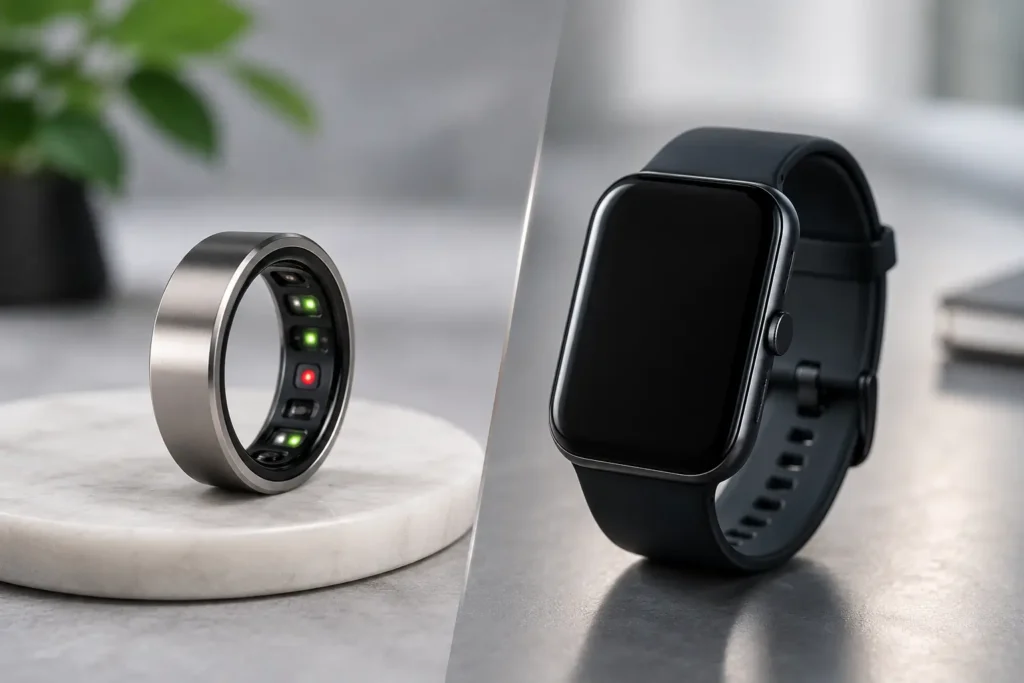
Choosing between a smart ring and a smartwatch depends on how you plan to use your wearable.
| Feature | Smart Ring | Smartwatch |
|---|---|---|
| Sleep Tracking | ⭐⭐⭐⭐⭐ | ⭐⭐⭐⭐☆ |
| HRV Monitoring | ⭐⭐⭐⭐⭐ | ⭐⭐⭐⭐☆ |
| Comfort | ⭐⭐⭐⭐⭐ | ⭐⭐⭐⭐☆ |
| Notifications | ❌ | ✅ |
| Fitness Tracking | ⭐⭐⭐⭐☆ | ⭐⭐⭐⭐⭐ |
| Battery Life | ⭐⭐⭐⭐⭐ | ⭐⭐⭐☆☆ |
| Productivity Features | ❌ | ⭐⭐⭐⭐⭐ |
Choose a Smart Ring if…
- Your primary goal is stress and recovery tracking.
- You want a lightweight device for 24/7 wear.
- Sleep tracking is your top priority.
- You prefer longer battery life.
Choose a Smartwatch if…
- You want notifications and apps.
- You exercise regularly and need workout tracking.
- You want an all-in-one wearable for health and productivity.
How Wearables Actually Measure Stress
Many buyers assume wearable devices can directly detect stress, but that’s not how the technology works.
Instead, wearables estimate stress by combining several physiological signals, including:
- Heart Rate Variability (HRV)
- Resting Heart Rate
- Respiratory Rate
- Sleep Quality
- Skin Temperature
- Physical Activity
- Recovery Trends
Advanced algorithms analyze these data points together to estimate how your body is responding to physical or emotional strain over time.
Because stress is highly individual, the most valuable insights come from tracking trends over weeks and months—not isolated readings.
How to Choose the Right Stress Monitoring Wearable
Before buying, ask yourself these questions:
Do you prefer a ring or a smartwatch?
Rings are generally more comfortable for continuous health tracking, while smartwatches offer greater versatility.
Are subscriptions acceptable?
Some devices require monthly memberships for advanced insights. If you prefer a one-time purchase, options like Garmin and RingConn may be better choices.
How important is battery life?
Longer battery life means fewer charging interruptions and more complete health data.
Do you need advanced fitness features?
Athletes should consider Garmin or WHOOP, while users focused on general wellness may benefit more from Oura or RingConn.
Which smartphone do you use?
Always verify compatibility with your Android or iPhone before purchasing.
Frequently Asked Questions
What is the most accurate wearable for stress monitoring?
Based on our research and evaluation, the Oura Ring 4 currently provides the most comprehensive stress-monitoring experience. Its combination of Heart Rate Variability (HRV), sleep tracking, resting heart rate, body temperature trends, and personalized recovery insights makes it one of the most reliable consumer wearables for understanding how your body responds to daily stress.
If you prefer a smartwatch, the Garmin Venu 3 offers an excellent balance between health tracking, fitness features, and battery life.
Can a smartwatch actually measure stress?
Not directly.
Smartwatches and smart rings cannot detect emotional stress in the same way a healthcare professional might evaluate it. Instead, they estimate physiological stress by analyzing changes in biomarkers such as:
- Heart Rate Variability (HRV)
- Resting Heart Rate
- Respiratory Rate
- Sleep Quality
- Activity Levels
- Skin Temperature (on supported devices)
These metrics help identify patterns that may indicate increased physical or mental stress over time.
Is HRV the best indicator of stress?
HRV is widely considered one of the most valuable indicators of recovery and stress resilience.
Generally speaking:
- Higher HRV often indicates better recovery.
- Lower HRV may suggest fatigue, illness, poor sleep, or increased stress.
However, HRV should always be interpreted alongside other health metrics rather than on its own.
Are smart rings better than smartwatches for stress tracking?
For most people focused specifically on wellness, yes.
Smart rings typically provide:
- Better overnight tracking
- More comfortable 24/7 wear
- Longer battery life
- Less distraction throughout the day
Smartwatches, however, remain the better option for users who also want:
- Notifications
- Calls
- Fitness apps
- GPS workouts
- Music controls
Do I need a subscription?
That depends on the brand.
| Brand | Subscription Required |
|---|---|
| Oura Ring | Yes |
| WHOOP | Yes |
| Garmin | No |
| RingConn | No |
| Samsung | No |
| Amazfit | No |
| Fitbit | Optional |
If avoiding recurring costs is important, Garmin and RingConn provide excellent long-term value.
Can wearable devices reduce stress?
A wearable cannot reduce stress on its own.
What it can do is provide greater awareness of your body’s physiological responses. By recognizing patterns in sleep, recovery, and daily habits, many users make healthier decisions that may contribute to better stress management over time.
Think of a wearable as a health coach—not a treatment.
Final Verdict
After comparing today’s leading smart rings, smartwatches, and fitness trackers, one conclusion stands out:
The best wearable for stress monitoring isn’t necessarily the one with the most sensors—it’s the one you’ll wear consistently and use to improve your daily habits.
For most people, the Oura Ring 4 remains our top overall recommendation. Its combination of outstanding sleep tracking, industry-leading HRV analysis, long battery life, and recovery insights makes it the strongest all-around option for understanding how stress affects your body.
If you prefer a smartwatch, the Garmin Venu 3 delivers the best mix of wellness features, fitness tracking, and battery life without requiring an ongoing subscription.
Athletes looking for advanced recovery analytics should consider WHOOP 5.0, while users seeking an affordable entry point will find exceptional value in the Fitbit Charge 6.
No matter which device you choose, remember that wearable technology works best when paired with healthy habits such as quality sleep, regular physical activity, mindfulness, balanced nutrition, and proper recovery.
The device provides the data—but your daily choices create lasting results.
WearableWell Recommendation
Best Overall
Oura Ring 4
Ideal for users who prioritize sleep quality, recovery, and long-term stress monitoring.
Best Smartwatch
Garmin Venu 3
Perfect for users who want comprehensive health tracking alongside advanced fitness features.
Best for Athletes
WHOOP 5.0
Designed for serious athletes focused on optimizing performance and recovery.
Best Budget Option
Fitbit Charge 6
An excellent choice for first-time buyers looking for reliable stress tracking at an affordable price.
Best Subscription-Free Smart Ring
RingConn Gen 2
The best alternative for users who want premium health tracking without monthly fees.